
Play Isn’t Just for Kids. It’s How the Best Ideas at Work Get Made.
We’ve spent the last three posts making the case for play in classrooms. Here’s the pivot: play doesn’t stop mattering the day we get a job.
For our students, play often is the work — it’s how they build the brain, the body, and the social skills for everything ahead of them. For adults, a playful mindset doesn’t disappear once the job title shows up. It becomes something else: how we solve problems, lead teams, and stay engaged in work that could otherwise flatten into routine.
A generation that’s already proving it
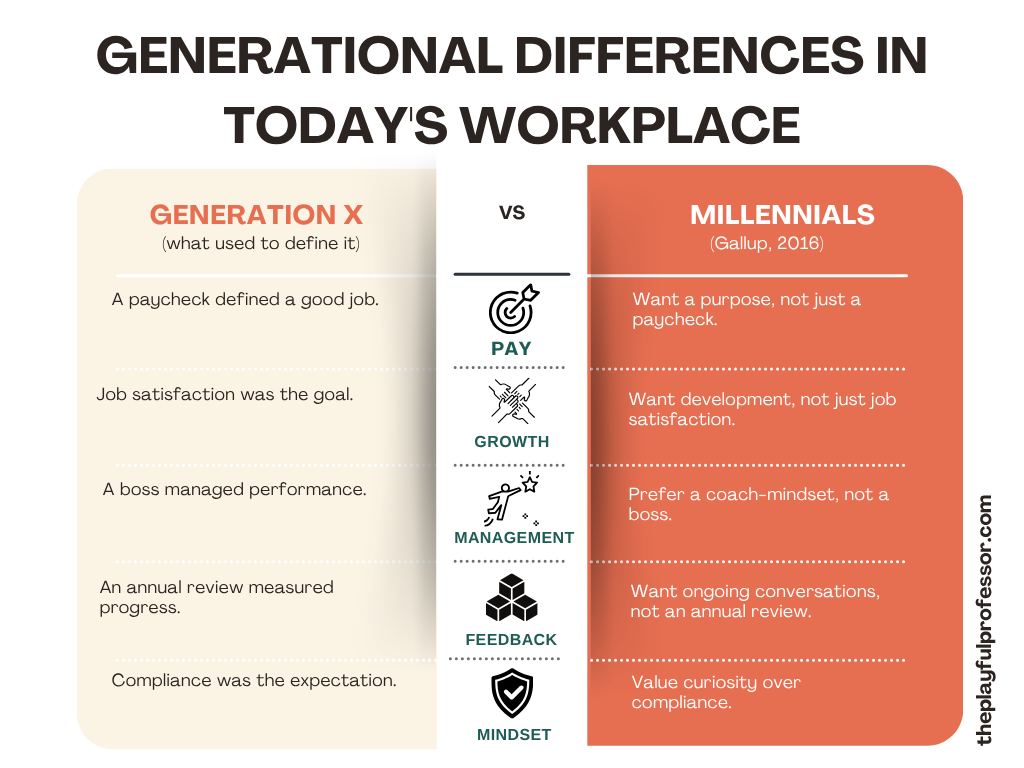
Gallup’s landmark 2016 study on millennials at work found a workforce redefining what a “good job” even means. Compared to previous generations, millennials:
Don’t just work for a paycheck — they want a purpose.
Aren’t chasing job satisfaction — they want development.
Don’t want a boss — they want a coach.
Don’t want an annual review — they want ongoing conversations.
Press enter or click to view image in full size
That list isn’t a generational complaint. It’s a description of a playful mindset applied to a career: curiosity over compliance, growth over grind, relationship over hierarchy.
Play makes us better at the actual job
Tim Brown, CEO of the design firm IDEO, put it plainly in his TED talk on creativity and play: playfulness helps us get to better solutions, do our jobs better, and feel better while we’re doing them.
A playful mindset stimulates the kind of divergent thinking that generates more possible solutions to a problem, instead of narrowing in on the first workable one.
The playful habits of people whom you might recognize as genuinely busy
Condoleezza Rice — a classically trained pianist who has performed publicly with professional musicians (NBC, NPR, Piano Performer Magazine) as a way to step outside the demands of being Secretary of State.
Soccer legend David Beckham has talked about unwinding with Lego builds. (Refinery29, The Telegraph)
Oprah Winfrey starts her mornings walking her dogs and unwinds some evenings by cooking. (Oprah.com, W Magazine, The List)
Bill Gates ends most years finishing a jigsaw puzzle, and treats it as a genuine unwind ritual. (CNBC, Dunya News)
Barack Obama has talked for years about pickup basketball as his way of clearing his head, including regular games during his presidency. (CNN, SI)
Warren Buffett plays bridge about eight hours a week — by his own account, one of his two main ways of managing stress — and has also spoken about picking up the ukulele. (CNBC, Inc)
Notice who’s already doing this well. The colleague who doodles in meetings might be doing exactly what the research says works.
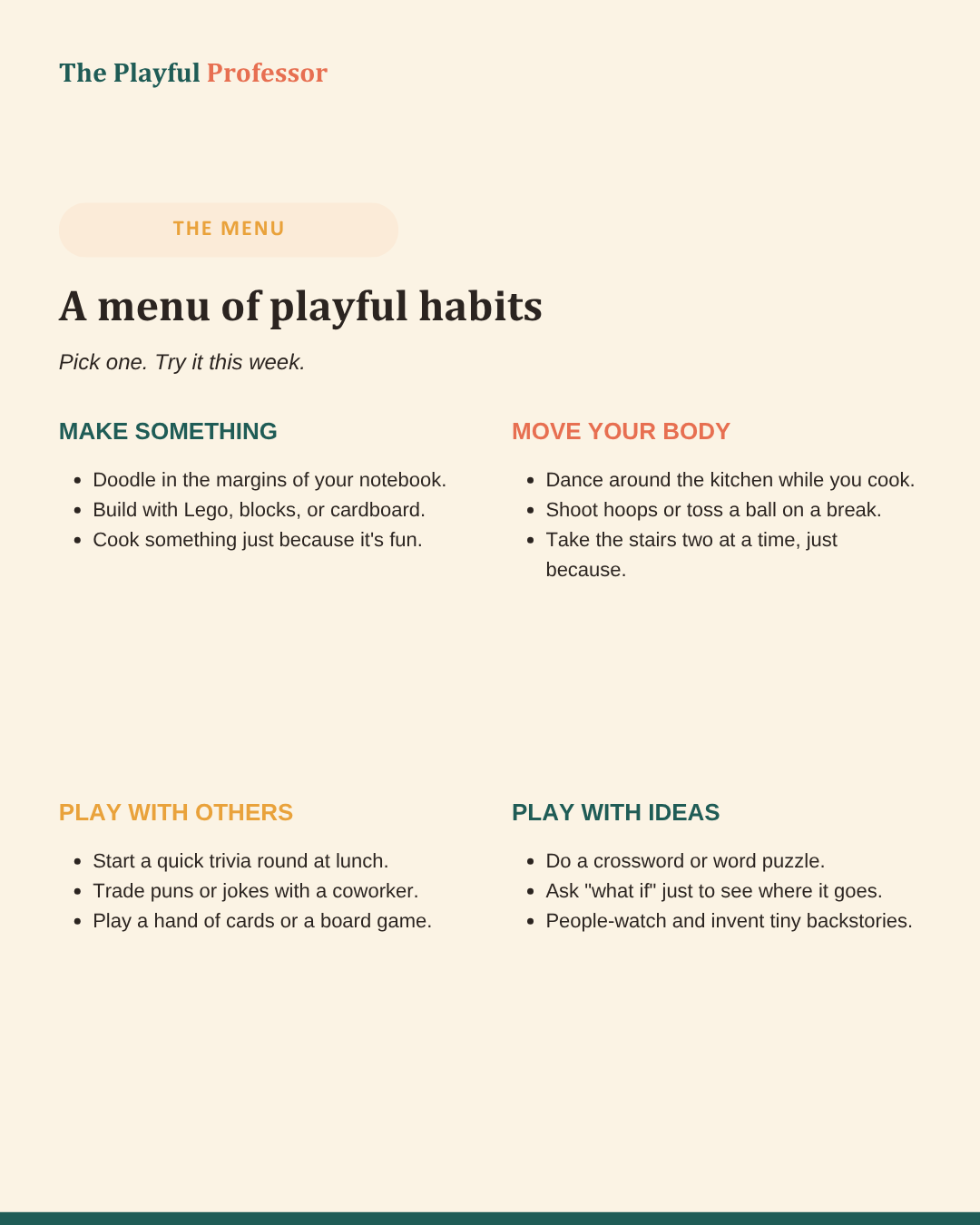
Play isn’t something we age out of needing. We just get better at hiding it — and that might be the part worth undoing.
Sources
Brown, T. (2008). Tales of creativity and play [Video]. TED Conferences. https://www.ted.com/talks/tim_brown_tales_of_creativity_and_play
Gallup (2016). How Millennials Want to Work and Live. Washington, DC: Gallup, Inc.
As a play ambassador for the US Play Coalition, I’m passionate about sharing the power of play for wellness and overall happy lives. As you continue to seek answers to your own questions on play, you might be interested in the following articles:
The Power of Play: Five steps for unlocking creativity and joy in our everyday lives
How to find your dream job: The role of play personalities in fulfillment
Do you need additional support for incorporating play in your life?
Consider buying my books on Bookshop.org, Barnes & Noble, Target, or Amazon. I appreciate the love.
