
Curiosity Wants Answers. Wonder Wants to Stay a While.
Watch a student notice an ant carrying a crumb twice its size, or feel the invisible push of two magnets for the first time. Their head tilts. Their mouth falls open a little. For a second, they’re not doing anything at all — they’re just in it.
Curiosity acts. Wonder pauses.
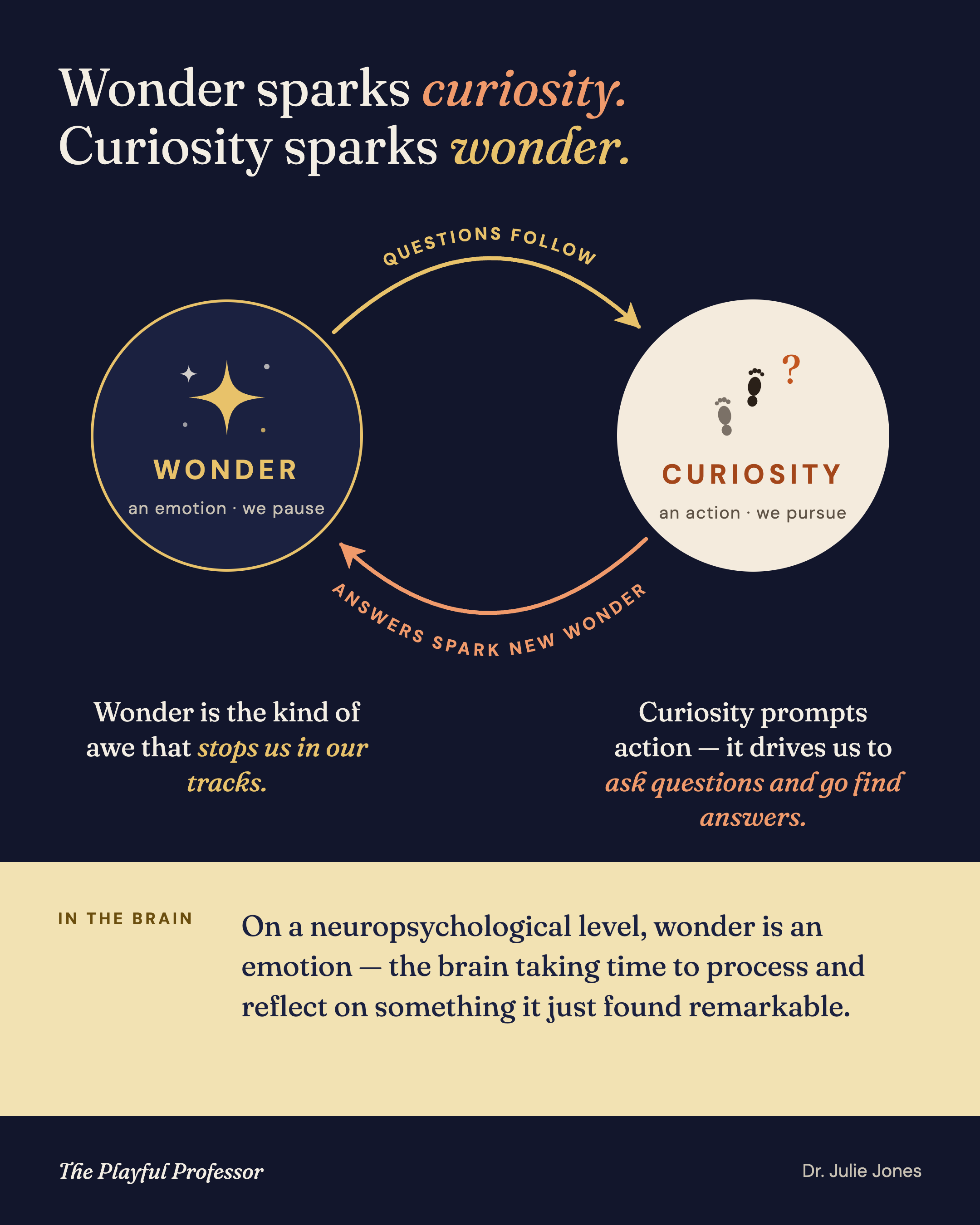
Curiosity prompts action — it drives us to ask questions and go find answers. But wonder is different: it’s the kind of awe that stops us in our tracks. On a neuropsychological level, wonder is an emotion — the brain taking time to process and reflect on something it just found remarkable.
Careful with “wonder inflation”
Once we notice how powerful wonder is, it’s tempting to chase it with bigger and bigger spectacle as we design lessons. The research suggests that action backfires — students start needing the spectacle to feel anything at all, and their capacity to notice the remarkable in ordinary moments actually shrinks.
Curiosity as a skill we can build on purpose
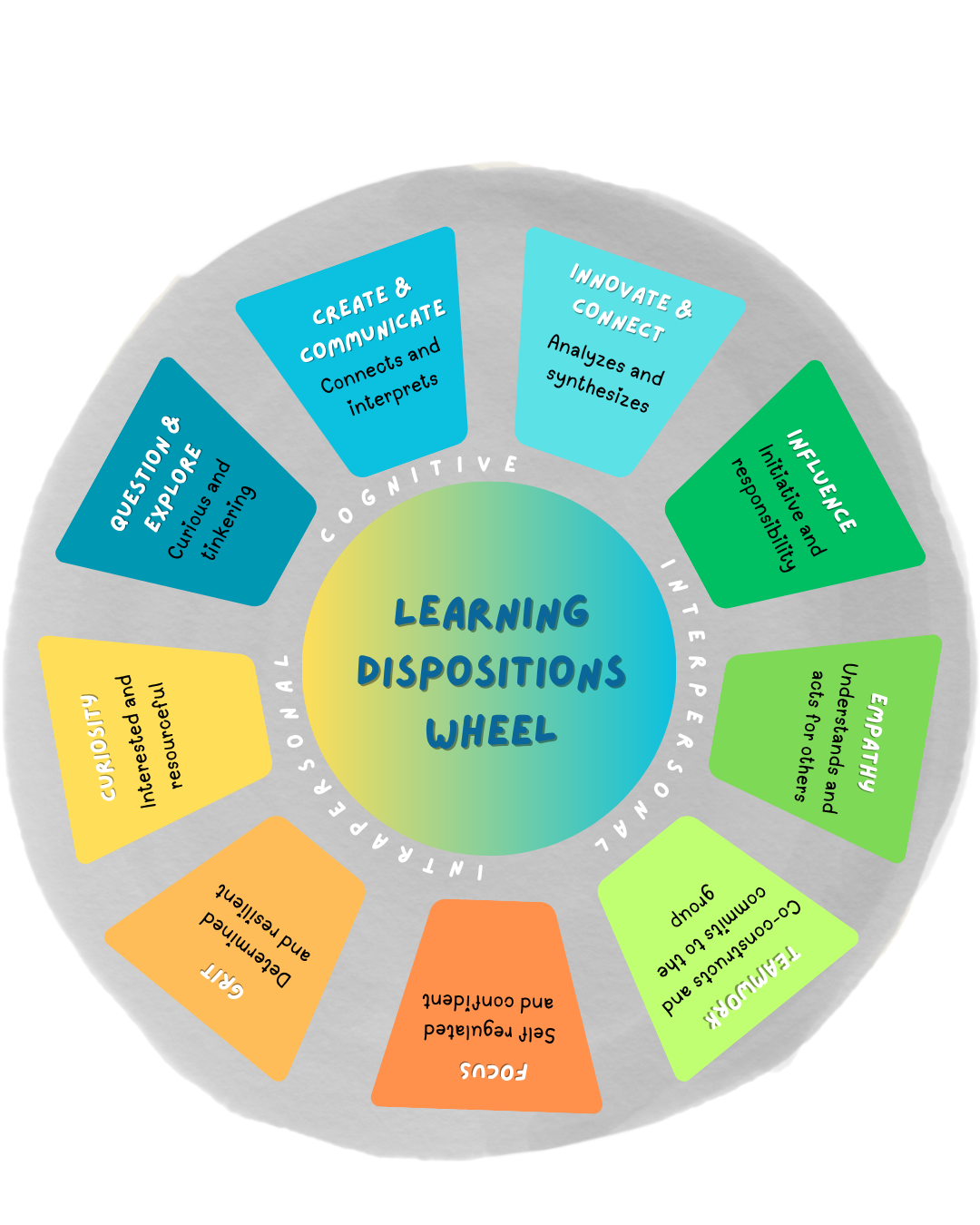
The Learning Disposition Wheel from 4C Transformative Learning names “Question & Explore” as a core cognitive disposition: the capacity to question, experiment, and reason toward the underlying principles of an idea. Playful learning is one of the most reliable ways to activate it.
What this means for Monday morning
Design around questions, not answers.
Start a Wonder Wall or Wonder Journal.
Resist the urge to go bigger.
Celebrate the question, not just the right answer.
Let iteration be visible.
Wonder doesn’t need our help to be big. It needs our help to be noticed.
Sources
Jones, J. (2026). Introduction to education: Cultivating curiosity and play in the era of AI. Dubuque, IA: Kendall Hunt
The Learning Disposition Wheel, 4C Transformative Learning. https://www.4ctransformativelearning.org/why-use-the-learning-disposition-wheel
