
I can still picture it. A round table at the front of a big room at Clemson University's Madren Center. Lights dimmed. Stuart Brown, the Stuart Brown, clicking to a slide that named eight different ways people play.
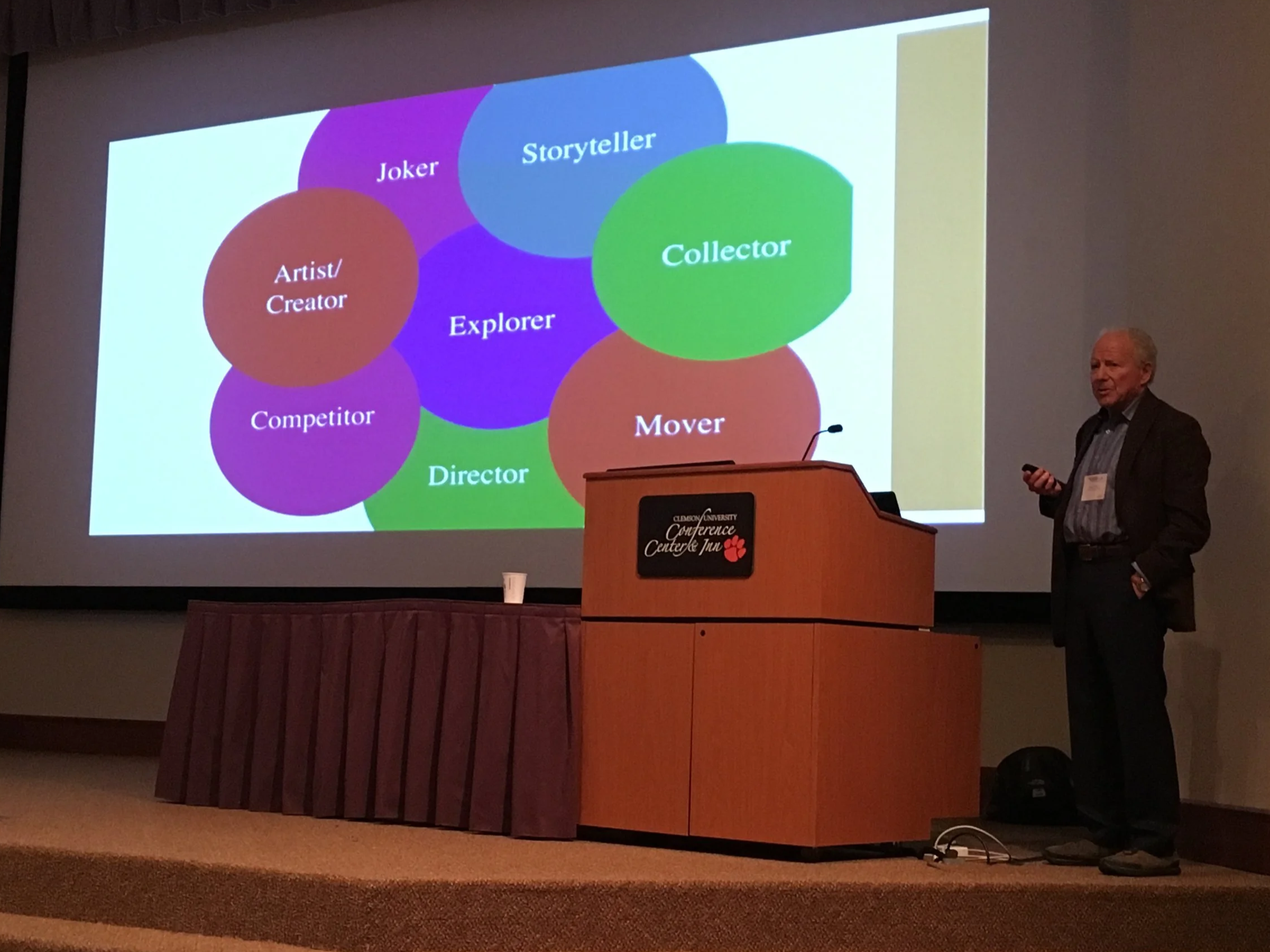
It was one of the most defining moments of my play life. Because it finally explained something I'd always noticed: what feels like play to me might make you feel like you just licked honey off a briar. And that's not a problem. It's the whole point.
The eight play personalities
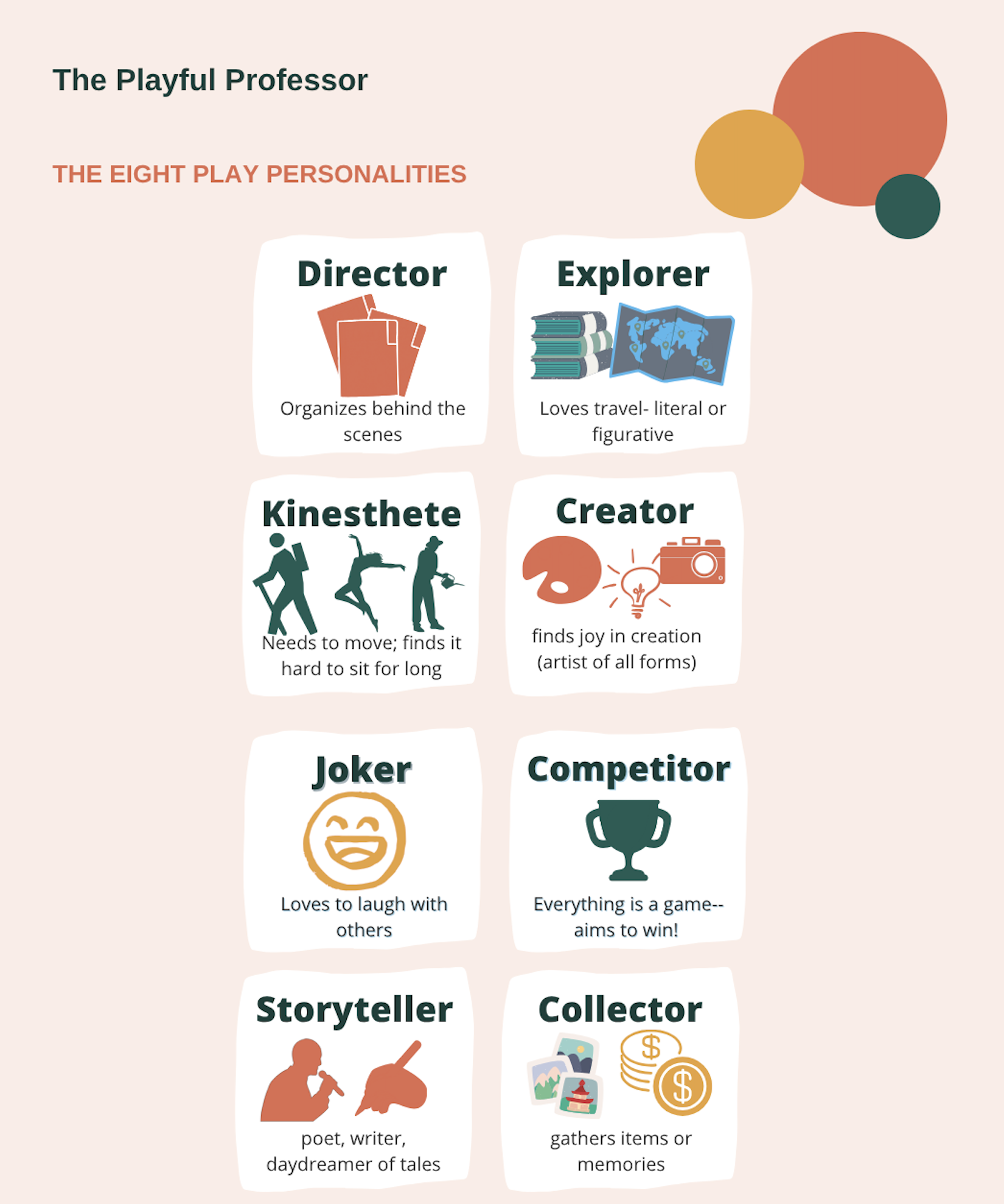
Here are the eight play personalities from Stuart Brown's work. Read through and see which ones sound like you. Most of us are a mix.
The Joker loves to make people laugh: pranks, puns, silliness. Their creativity is always under construction.
The Kinesthete needs to move to think: dancing, hiking, puttering, gardening. Choreographer Gillian Lynne (you might recognize her work in Cats and The Phantom of the Opera) was once thought to have a learning problem because she couldn't sit still. A wise doctor watched her dance to the radio and told her mother, "Gillian isn't sick; she's a dancer."
The Explorer loves the new and different, whether that's places, music, ideas, or perspectives, and finds it in travel or in a novel set somewhere far away.
The Competitor finds comfort in rules and loves to win. I live with one– my daughter, when younger, turned teeth-brushing into a nightly race with her sister. The same child, now much older, still always wins game night. Competitors give the world games the rest of us would never think of.
The Director is the great planner who makes order out of chaos. Not the loud, bossy one. The one in the kitchen, working behind the scenes so everyone leaves feeling like it was the best event ever.
The Collector gathers things, memories, and experiences, usually with a theme, and can't get enough. State park stamps, anyone?
The Artist/Creator finds joy in making something: painting, building, fixing, scribbling. You don't need a studio or a book deal. If making things makes you happy, this is you.
The Storyteller is jotting poems on napkins, narrating chores, slaying dragons with the broom while sweeping the porch.
When I took the assessment, my results indicated both artist and director. Knowing that about myself helps me make peace with my choices, like why a perfectly planned game night energizes me, and why I'll happily spend a Saturday painting something nobody else will ever see.
Why this matters for creativity
There are play books out there that give you a formula for fun: plan it every day, every week, every month. What a great idea... for a director. But imagine handing that formula to a joker or a storyteller who finds no joy in planning. They might decide they just can't play, or can't be creative. I can't think of a worse outcome.
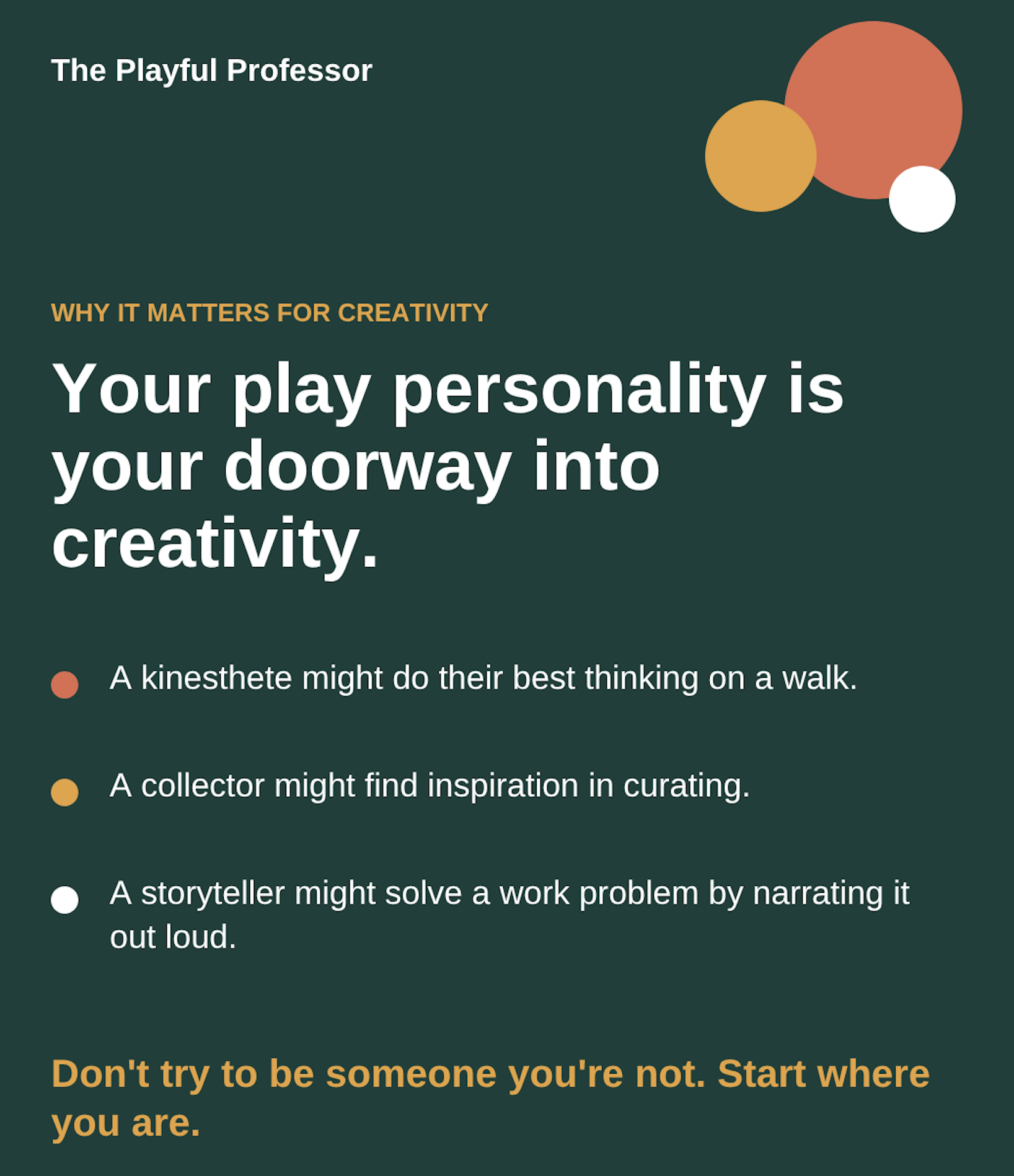
Your play personality points to your doorway into creativity. A kinesthete might do their best thinking on a walk. A collector might find inspiration in curating. A storyteller might solve a work problem by narrating it out loud. Don't try to be someone you're not. Start where you are.
And knowing other people's play personalities strengthens how we work and live with them. This knowledge doesn’t cause overnight relationship transformations. But… you know… the smallest of rocks still cause ripples in a pond.
Try this
Talk it over. Bring the list to coffee or dinner with the people you love most and guess each other’s types. You might find out who’s the secret competitor at your table.
Play to your type. Pick one thing this week that fits your top type. Kinesthetes, take the long way on a walk. Directors, plan a pop-up party. Jokers, open with a pun.
Stretch. Try one play experience from a type that isn’t yours. Explorers, follow a recipe exactly. Directors, say yes to a plan someone else made. Then notice how it feels.
Teachers: have students guess their play personalities, then talk about how each type could help the class community. Jokers make great door greeters.
Want the full quiz? It’s in The Playful Life (and an earlier version is in The Playful Classroom).
Sources
Brown, S., & Vaughan, C. (2009). Play: How it shapes the brain, opens the imagination, and invigorates the soul. Avery.
Jones, J. P., & Dearybury, J. (2020). The playful classroom. Jossey-Bass.
Jones, J. P., & Dearybury, J. (2022). The playful life.
Robinson, K. (2006). Do schools kill creativity? [Video]. TED Conferences.
Do you need additional support for incorporating play in your life?
Follow my quest for the playful life: Instagram, Facebook, LinkedIn
Consider buying my books on Bookshop.org, Barnes & Noble, Target, or Amazon. I appreciate the love.
Read the free content on my website.
Buy some PLAY-swag.
